
Introduction
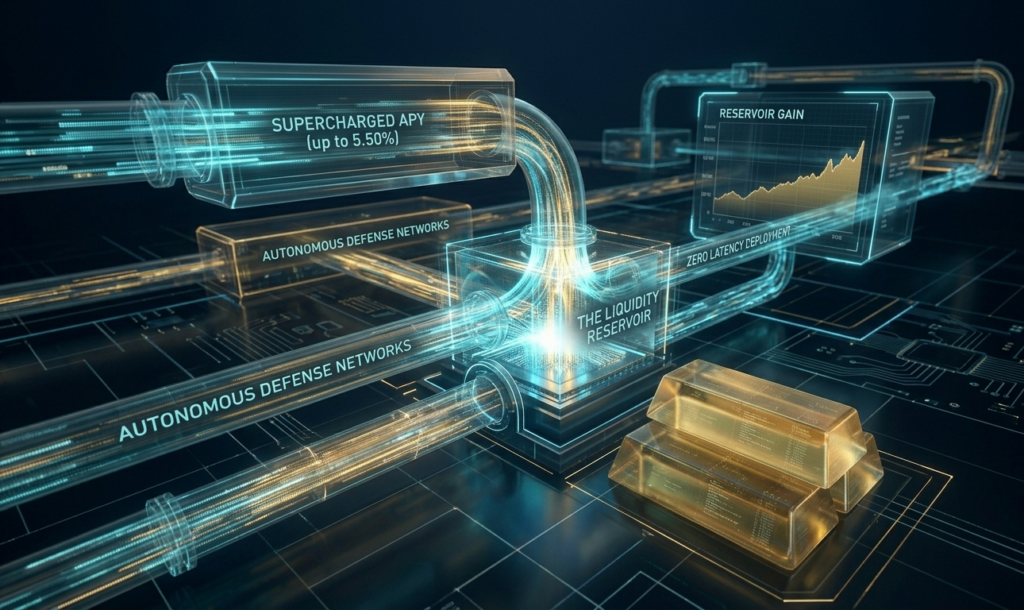
In the hyper-accelerated economy of May 2026, the traditional bank account has become a relic of financial passivity. As the gap between digital-first institutions and legacy banks widens, the concept of «saving» has been replaced by Liquidity Engineering. We no longer park money; we deploy it into a Liquidity Reservoir—a high-yield, autonomous engine designed to protect purchasing power from the twin threats of inflation and institutional inefficiency.
To master your wealth in 2026, you must stop being a consumer of banking services and start being an architect of your own capital.
1. The Strategy: Building the Autonomous Waterfall
The most successful financial engineers in 2026 do not move money manually. They build Autonomous Waterfalls. This is a logic-based system where your capital flows through different «pressure valves» based on your immediate needs and long-term goals.
The Architectural Blueprint:
- The Catchment (Transactional Account): All income (salary, dividends, freelance payments) lands here. You maintain a «Buffer» of exactly one month’s expenses.
- The Pressure Valve (RTP Sweep): Any dollar exceeding the buffer is instantly siphoned using Real-Time Payment (RTP) rails into your primary High-Yield Savings Account (HYSA).
- The Distribution (Sub-Vaults): Once inside the Reservoir, AI-driven labels partition the funds into:
- The Survival Core: 6 months of absolute expenses.
- The Tax Shield: Automated sequestration based on the latest IRS tax guidelines.
- The Opportunity Fund: Liquid «dry powder» ready for market volatility.
2. The Quantitative Edge: Yield Benchmarks
To justify the engineering effort, we must analyze the «Efficiency Dividend.» In 2026, the cost of banking at a legacy institution is no longer measured in fees, but in lost opportunity.
May 2026: Capital Efficiency Matrix
| Institution Type | Target APY | Tech/Speed Stack | Security Framework | 5-Year Net Result (on $100k) |
| Legacy Commercial Bank | 0.45% | ACH (3-5 days) | SMS-2FA | $102,270 |
| Standard Digital HYSA | 3.85% | ACH (1-2 days) | App-based MFA | $120,770 |
| Elite 2026 Smart Vault | 5.45% | Instant (RTP) | Multi-Biometric | $130,410 |
| T-Bill Ladder (Digital) | 4.10% | T+1 Settlement | Sovereign Ledger | $122,250 |
As of May 2026, an Elite Smart Vault provides nearly $28,000 more than a legacy account over five years. This is wealth created solely through structural optimization. By choosing the right reservoir, you are effectively granting yourself a significant annual raise without working a single extra hour.
3. Security 4.0: Protecting the Sovereignty of Capital
In an era where AI can mimic voices and faces, the security of your Reservoir is paramount. Smart Savings in 2026 relies on Behavioral Telemetry. Your bank doesn’t just check your password; it monitors the unique «rhythm» of your digital interactions—the speed of your typing, the angle at which you hold your phone, and your habitual transaction patterns.
Furthermore, elite vaults now utilize Multi-Bank Sweep Networks. This technology automatically distributes your balance across a network of FDIC-insured institutions, effectively providing millions of dollars in federal protection while maintaining a single, unified interface for the user. You can verify your bank’s insurance standing at the FDIC BankFind portal.
4. Real Yield: The Only Metric That Matters
In 2026, nominal interest is a vanity metric. To understand your true financial progress, you must calculate your Real Yield. This is the difference between your APY and the Consumer Price Index (CPI).
- The Legacy Trap: If inflation is 3.4% and your bank pays 0.45%, your Real Yield is -2.95%. You are becoming poorer every day.
- The Smart Pivot: At a 5.45% APY, your Real Yield is +2.05%.
A positive Real Yield is the fundamental requirement for wealth building. If your savings engine isn’t outperforming inflation, your «safety net» is actually a melting ice cube.
5. Psychological Fortification: The Friction Benefit
While the technology of 2026 emphasizes speed, the human element requires Intentional Friction. Smart savings architecture separates your «Spending Capital» from your «Reservoir Capital» by placing them in different institutions.
Behavioral studies, often cited by analysts at NerdWallet and Bankrate, demonstrate that this separation reduces «lifestyle creep.» The 30-second delay required to switch apps and move money from the Reservoir to a checking account is often enough to deactivate the impulsive «buy now» centers of the brain.
6. Implementation Checklist for the Modern Engineer
To transition your finances into a 2026-grade Reservoir, follow this protocol:
- Audit for Latency: Identify any cash earning less than 4% APY.
- Verify RTP Compatibility: Ensure your chosen HYSA supports instant transfers to your brokerage and checking accounts.
- Automate the Overflow: Set a «Logic Gate» in your primary account to sweep all excess funds every Friday at 4:00 PM.
- Label Sub-Vaults: Use digital buckets to segregate taxes from emergency funds to avoid «mental accounting» errors.
7. The Role of AI in 2026 Savings
Modern HYSAs are increasingly «Agentic.» They don’t just sit there; they analyze your spending habits and suggest when you can afford to move more money into higher-yield instruments like T-Bills or CDs. This Predictive Liquidity ensures that your money is always in the highest-yielding bucket compatible with your upcoming cash flow needs.
8. Conclusion: The Sovereign Mandate
The economy of 2026 does not forgive passivity. The «Inertia Tax» is real, and it is expensive. Building a Liquidity Reservoir is about more than just finding a better interest rate; it is about creating a secure, autonomous, and mathematically optimized fortress for your wealth.
By adopting this architecture, you claim the Sovereignty of Capital. You ensure that your money works as hard as you do, protected by the best technology of the era. The era of the «saver» is over. The era of the «Liquidity Engineer» has begun.
Build your reservoir today. Your future self is counting on the yield.